
TITLE OF THE MASTER THESIS: The Role of the Employer’s Stakeholder Management in Project Delays and Claims in Construction Projects
TITLE OF THE MASTER: Project and Contract Management in Construction Works
AUTHOR: Eng. Ayse Temel
TUTOR: Eng. Giovanni Franchi
Construction projects are complex formations involving numerous internal and external stakeholders. The success or failure of such projects often depends on how effectively these stakeholders are managed – especially by the Employer, who is typically responsible of providing site access, land acquisition, resource provision and coordination with the affected communities under the FIDIC Contracts, specifically the Yellow Book. Despite an increasing awareness of the importance of stakeholder engagement, the different ways in which Employer-led failures lead to project disruptions, delays and claims remain under-researched.
This paper investigates the causal relationship between the Employer’s failures in stakeholder management and the emergence of project delays and contractual claims with two case studies from a major European highway project, each demonstrating a different aspect of stakeholder management failure within the construction industry.
Two distinct cases are explored. First one centers on external stakeholder issues, focusing on the consequences of the Employer’s inadequate engagement with local communities resulting in protests and blockades due to compensation disputes related to expropriation. As a result, the project was severely delayed and the resources of the Contractor were either kept idle or not used to their full potential. The subsequent claims for EOT and additional costs were directly attributable to the Employer’s lack of proactive stakeholder management and failure to address the community concerns in a timely and transparent manner.
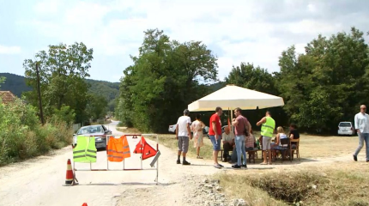
Figure 1 Protestor action on the state road preventing the Contractor to enter the site and continue works, delaying project completion

Figure 2 Protestor action on the Contractor’s working location, preventing work progress directly and resulting in idle personnel and machinery
The other case examines internal stakeholder mismanagement, specifically the Employer’s delays in determining proper material sources and providing timely access required for construction and quality confirmation. The Employer had identified the intended quarry locations based on outdated data at the time of contract signing phase, on the particular conditions of the contract. The Contractor received the commencement date notification, though the access to the intended quarry locations needed in order to verify the quality of the source was pending. When the Contractor finally received the access, it was discovered that the intended sources were unfit for purpose. The Employer’s slow decision-making and reluctance to investigate and provide alternative sources forced the Contractor to seek out distant privately-owned quarries at its own risk and cost. The Contractor was involved with a local concrete supplier to mitigate further delays, especially in tunnel works, with the approval by the Employer. This action was a temporary solution and only shifted the activities on the critical path. Therefore, disruption on the project’s critical path was inevitable. Moreover, the Employer’s indecision also resulted in substantial additional cost for transportation, procurement and idle machinery and manpower. The Contractor’s timely formal notifications and documentations played an essential role in defending the EOT and additional cost claims.
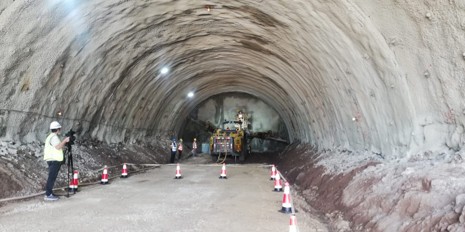
Figure 3 Tunnel works from the project, demonstrating the need for the shotcrete implementation for tunnel support
Key Findings and Lessons Learned
- Active stakeholder engagement is needed: The Contractor suffered major project delays due to blockades when communities were not engaged and compensation issues related to expropriation were not resolved by the Employer in a timely manner.
- Coordination within the organization is key: Relying on old information and slow decisions on material sourcing can change the critical path of the project and create additional costs.
- Documentation and timely communication matter: The Contractor’s systematic documentation and timely notifications were crucial in claiming and mitigating most of the delays.
- Industry lessons: Stakeholder management is a contractual obligation and a key risk mitigation strategy – it can be much costlier to ignore it than to resolve issues early. Employers should maintain up-to-date project data, address site access and community issues prior to commencement, and respond promptly to emerging problems.
- Wider relevance: Similar cycles of claims and disruption can emerge from failures in managing external (community) and internal (organizational) stakeholders. So that costly mistakes aren’t repeated in future infrastructure projects, there is much to be learned from these cases.