
TITLE OF THE MASTER THESIS: Impact of Project Scope Management on Procurement and Planning Performance Case Study – NEOM Gulf of Aqaba Developments
TITLE OF THE MASTER: Project management in construction works with BIM
AUTHOR: Brankovic Katarina
TUTOR: Ing. Franchi
Large-scale and design-driven developments are increasingly delivered in environments where project requirements, technical information, and design solutions continue to evolve after planning and procurement activities have already begun. In these conditions, project scope cannot always be treated as a fixed input established at project initiation. Its level of definition develops progressively as site information becomes available, specialist disciplines are coordinated, technical feasibility is tested, and design decisions are refined. This thesis examines how that evolving scope influences procurement and planning performance, using the NEOM Gulf of Aqaba developments in the Kingdom of Saudi Arabia as a case study.
The Gulf of Aqaba portfolio provides a relevant context because it combines ambitious destination-based hospitality projects with complex natural settings and extensive multidisciplinary coordination. The analysed developments include Leyja, Xaynor, Nature-Based Resort, Sirrana, Romantic Bay, and Wadi Tayyib. Although each project responds to a distinct location and design narrative, the portfolio shares a common delivery environment in which architecture, landscape, structural engineering, building services, sustainability, mobility, specialist systems, and other disciplines must be integrated through progressive design stages.
The research adopts a qualitative case study approach based on the review and comparison of project documentation and design information. Particular attention is given to Wadi Tayyib, where a narrow canyon environment, significant topographical constraints, restricted access, and progressive technical definition provide a clear example of the relationship between scope maturity and project performance. The case demonstrates that site conditions are not secondary considerations: they directly influence building placement, circulation, structural strategy, construction logistics, and the level of specialist input required. Where technical information is incomplete at an early stage, design teams must work with assumptions that may later require validation and revision.
Across the analysed projects, the research identifies a consistent relationship between scope maturity and procurement reliability. When scope information is distributed across multiple documents, boundaries remain unclear, or technical requirements are still developing, bidders must interpret gaps and introduce assumptions. Different assumptions can produce different estimates of effort, resources, and risk, reducing the comparability of commercial proposals. Procurement performance is therefore influenced not only by market competition, but also by how clearly and coherently the project scope can be understood at the time of bidding.
The same relationship extends into project planning. Programme durations, consultant manpower, and cost estimates are fundamentally interconnected, and each depends on the level of scope definition available when the plan is prepared. Evolving scope can create programme uncertainty and inaccurate resource allocation, leading to additional coordination, iteration, and rework. Attempts to recover time by increasing manpower may introduce further coordination complexity and higher cost without producing proportional gains in productivity. The thesis describes this as a scope-driven feedback loop: uncertainty in scope propagates through schedule, resources, and cost, requiring further adjustment as the project develops.
The principal conclusion of the research is that project scope should be managed as a dynamic project driver rather than a static project input. In complex developments, effective planning depends on recognising the maturity of scope and adapting procurement, programme, resource, and cost strategies accordingly. The main lessons learned are the importance of defining physical boundaries as early as practicable, consolidating scope information, validating technical feasibility before major commitments, strengthening multidisciplinary coordination, and reviewing programme and manpower assumptions as the design develops.
The research also shows that the influence of scope continues beyond design and procurement. Early decisions affect project closure, handover, commissioning, maintainability, operational readiness, and lifecycle cost. For future complex developments, scope management should therefore be continuous and lifecycle-oriented. Adaptive programme development, dynamic consultant resource planning, scenario-based cost estimation, and earlier integration of operational considerations can improve project reliability while preserving the flexibility required for innovative design. The central lesson from the case study is that project success depends not only on following an initial plan, but on managing how the plan must evolve as the scope becomes better understood.
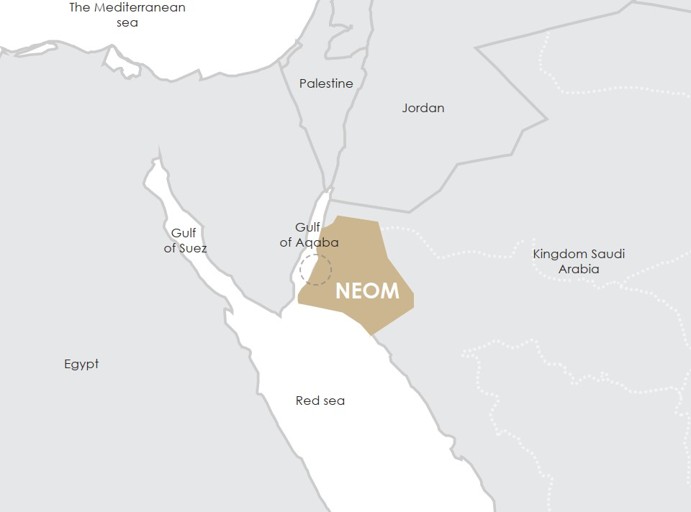
Figure 1. Project Location; Gulf of Aqaba
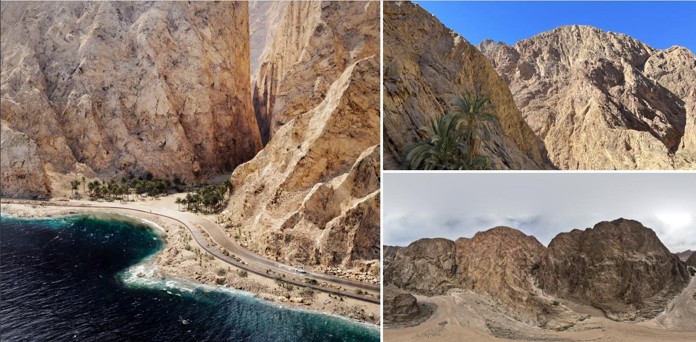
Figure 2. Wadi Tayyib site characteristics and spatial constraints, showing the topographical conditions that influence access, buildable areas, and project configuration. Source: Wadi Tayyib project documentation, as reproduced in the thesis.