Master’s Thesis Title:Development and Implementation of an Integrated Information Management Protocol According to ISO 19650: A Case Study Applied at Pitagoras Group
Master: BIM for Project and Contract Management in Construction Works
Author: Fábio Acciaiuoli de Castro
Tutor: Eng. Franchi
The work began with a simple observation: BIM is transforming the AECO industry, but not evenly. Large organisations, with the resources and governance structures to match, have already taken their BIM maturity quite far. Small and medium-sized enterprises – the majority of the sector, and certainly the majority of the Portuguese architectural market – are still finding their way, often working with fragmented and only partially digital workflows.
In Portugal, this is compounded by something very concrete: there has never been a national standard for structuring the Bill of Quantities and Works, while the legislative drive towards mandatory BIM is still finding its place in day-to-day practice. This dissertation does not interpret these barriers as purely technological, or even primarily cultural. It sees them as Project Management risks: duplicated effort driving up costs, poorly coordinated disciplines eroding schedules, undocumented decisions leaving scope dangerously undefined.
This dissertation is the account of what happen when Pitagoras Group, a small/medium-sized Portuguese architectural practice, attempted to implement its own BIM Protocol and build the tools required to make it usable on a day-to-day basis – a suite called PitagorasBIMTools, developed in-house for Autodesk Revit 2025. From the beginning, the worked was framed through a Project Management perspective, and that framing remained in place throughout its development. The development of the protocol itself followed an Action Research cycle, grounded in Business Process Reengineering and structure around the “three-legged stool” – People, Processes and Information. The case study was assessed against for PM knowledge areas around which ISO 19650 itself is structured – scheduling, risk, change control and close-out/operation – asking, in each case, not what the standards says should happen, but what a small team whit limited resources was actually able to put into practice on a real project, and what the company consciously chose to leave out.
The protocol itself rests on three things that ultimately proved more interdependent than the team had expected. First, an internal information management structure aligned with ISO 19650 and the Portuguese classification system, SECCLass, which itself aligns with the buildingSMART Portugal WBS, a standardized work breakdown structure designed to unify bill of quantities creation and cost estimation across the Portuguese construction sector using openBIM standards, in which Revit’s native Keynote parameter becomes the single relational key linking each modelled object to its classification, its cost item, and any documentation ultimately generated from it. Second, the instrumentation of that same protocol through C#-compiled add-ins to automate processes, ranging from classification and real time quantity/cost estimation to close-out documentation. Third, something the company had not anticipated or planned for at all at the beginning: adopting Dynamo with CPython3 scripts as a means of rapid prototyping, because compiling a permanent add-in everything something needed an adjustment simply could not keep pace with the reality of a live project.
All this work was tested on a real, pre-existing pilot project: a mixed-used development in Guimarães comprising 122 residential units, a 111-room hotel, commercial spaces and a federated set of 45 architectural models. Being a projected initiated prior to the protocol in its current form, bringing it into compliance with the new standards thaight the team more than starting from scratch would have done. It showed exactly where day-to-day practice diverged from the standards and forced the development of some model remediation and production tools that the company had not anticipated needing.
And because the client never issued a formal EIR – which, given the Portuguese practice, is quite common – Pitagoras Group ultimately wrote its own BIM Execution Plan. In practice, that document became the project’s PM plan: it defined roles thorugh a RACI structure aligned with ISO 19650 and national legislation and made Mobilisation Tests mandatory before any actual production work would begin.

Figure 1: Federated Revit Model of the Pilot Project, assembled from 45 linked architecture models
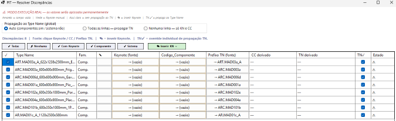
Figure 2: The Keynote reconciliation tool developed for the project: a Dynamo-based interface to modify and/or confirm the classification code (keynote) that drives automation
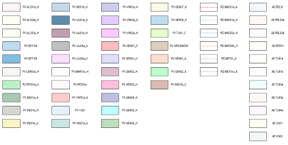
Figure 3: Automatically generated finish legend: colour-coded swatches produced directly from the model’s active view filters – an example of the protocol’s core principle, that documentation should be a read-out of the model, not a parallel manual effort
Main Conclusions and Lessons Learned
The results show that a standards-aligned BIM Protocol is operationally viable within a Portuguese SME, given the protocol is accompanied by actual instrumentation: automation without protocol to frame it has no direction. Viewed through a PM standpoint, taxonomic standardisation itself is undeniably a strategic management instrument. As examples, a consistent semantic classification supported automated scope and quality checks, provided Procurement with a reliable and dispute-resistant basis for tendering, and established the single source of truth required to reduce to a minimum any contractual risk. The Pitagoras Group experience shows consistently that protocol and instrumentation were developed through constant feedback loops – the tools repeatedly exposed gaps that the protocol had not yet formalised, while the protocol continuously reshaped what the tools needed to respond next.
A second, unplanned finding is related to the development process itself. Direct compilation of permanent C# add-ins proved to be the right approach for stable, cross-project functionality. Nevertheless, it revealed itself to be too slow and rigid for the pace of adjustments required by a live project. Dynamo, with CPython3 scripts, aided by Artificial Intelligence, filled this gap as a lightweight prototyping environment – a legitimate intermediate step that allowed the team to test, correct and validate business logic directly against real project data and necessities before making it permanent. Several of the scripts ultimately validated functionality that the equivalent compiled module had not yet achieved.
Viewed through the PM lens adopted by this dissertation, the case study also provides an honest portrait and, arguably, a more useful one than a textbook implementation: formal instruments prescribed by ISO 19650 were never fully operationalised by the company. Instead, the team trusted on lighter and more reactive mechanisms which, in practice, fulfilled the same essential functions of predictable cadence and traceable resolution, without the administrative overhead that a small team could not realistically sustain. This gap between prescribed formality and practical reality is treated not as a failure to be concealed, but as a finding of value in its own right, directly relevant to understanding how PM structures can be reasonably adapted to the scale of an SME. Ultimately, the findings also serve as key lessons learned to guide and refine information management workflows in future projects.
This dissertation also defines its own boundaries: contractual project close-out and the transition to asset operation (PIM to AIM) were not empirically validated. The pilot project remains at the Detailed Design stage; these aspects are addressed conceptually and explicitly left as future work. Similarly, empirical validation of interoperability through IFC and the full implementation of the SharePoint Module remain open line of development for a subsequent project.
The most significant and transferable contribution of this work is not any specific tool or script in itself. These were deliberately built around Pitagoras Gorup own protocol, naming conventions and internal processes, and would require substantial adaptation in another context. What is replicable is the method: selecting a single universal native parameter as a relational primary key; treating rapid, low-cost prototyping as a legitimate development phase before final compilation, rather than a symptom of disorganisation; and, above all, recognising that naming and classification discipline is the non-negotiable prerequisite for any form of automation – without it, technology may amplify error rather than eliminate it.
Within a PM standpoint, the broader lesson is that a SME does not need the entire formal apparatus envisioned by ISO 19650 to manage information responsibly. It needs a protocol and a set of tools capable of delivering the same PM outcomes through mechanisms proportionate to its own scale. It is this method, more than any script or line of code, that this dissertation leaves as a replicable pathway for other SMEs in the Portuguese AECO sector as they start their own digital and management transition.