
Title: Enhancing Infrastructure Project Delivery through BIM and Project Management Integration: A Practical FrameworkAligned with Abu Dhabi Municipality Guidelines
Master: Project management in construction works with BIM Author: Eng. Mostafa Elshamy
Tutor: Eng. Giovanni Franchi
Abstract
The integration of Building Information Modeling (BIM) with project management frameworks has transformed the delivery of infrastructure projects globally. In Abu Dhabi, the Abu Dhabi Municipality (ADM) has introduced detailed BIM standards to streamline design coordination, improve construction outcomes, and ensure data-rich handovers.This thesis investigates the real-world implementation of these standards within public infrastructure projects, analyzing how effectively they align with on-ground project management practices.
Through document analysis, BIM model audits, and stakeholder engagement, the research evaluates ADM’s BIM documentation structure, model quality requirements, QA/QC processes, and compliance enforcement. A case study of an infrastructure project in Abu Dhabi is used to assess practical application, identify gaps, and quantify benefits in terms of coordination efficiency, reduced rework, and digital maturity.
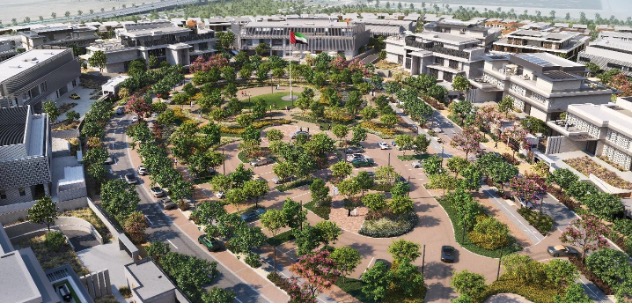
The findings reveal both strengths and limitations in ADM’s digital transformation efforts. While standards and templates are well-defined, their rigid structure and lack of tailored support create challenges during implementation. The study concludes with a set of strategic and technical recommendations aimed at enhancing documentation usability, supporting practitioners, and reinforcing ADM’s position as a digital leader in infrastructure delivery. The pilot project was implemented by Modon Properties. Hudayriyat Central Island is led and improved by Modon BIM team and consultants. Some improvements were executed and developed through producing Modon EIR and Standards to cover gaps through the various stages of the projects.
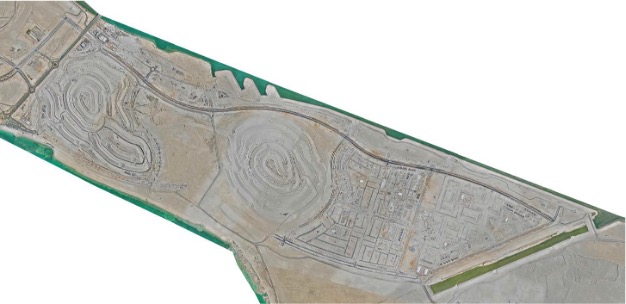
Figure 1 – Drone Image June 2025
Research Problem
While the Abu Dhabi Municipality (ADM) has issued progressive BIM mandates to modernize public infrastructure delivery, practical implementation across design and construction stages often faces technical, organizational, andprocess-related challenges. There is a clear gap between the intended goals of ADM’s BIM standards and their effective execution in live projects, particularly in aligning documentation, models, and workflows with projectmanagement realities.
This thesis seeks to answer:
- How effectively are ADM BIM guidelines being applied in infrastructure projects?
- What challenges do project stakeholders face in integrating BIM with traditional project delivery?
- What adjustments to templates, processes, or training would improve BIM maturity and compliance?
The study aims to bridge the disconnect between BIM theory and practice in the context of Abu
Dhabi’s infrastructure transformation.
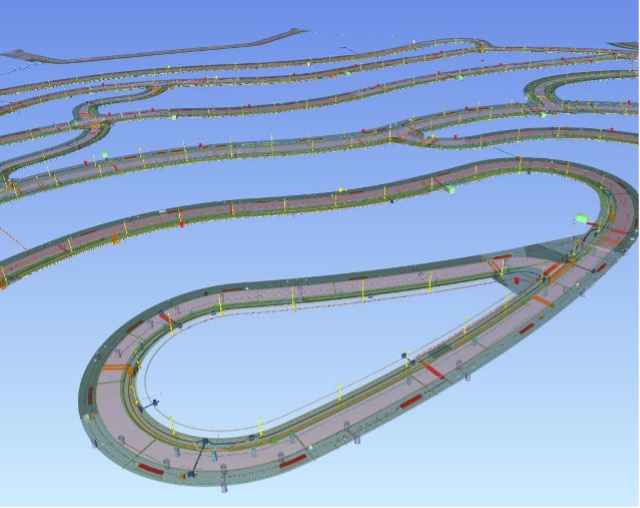
Figure 2 -Infrastructure Federated Model
Conclusion
This research has demonstrated that BIM can deliver measurable improvements in infrastructure project coordination, quality, and value when paired with structured project management. Abu Dhabi’s ADM standards provide a robustfoundation, but effective implementation requires greater attention to template flexibility, user training, version control, and real-time collaboration.
Key takeaways include:
- BIM significantly reduced rework and design clashes in the studied
- ADM documentation, while comprehensive, often lacks clarity for field
- Stakeholders desire more guidance, training, and communication during BIM
Strategic recommendations include simplifying documentation, enhancing feedback loops, and institutionalizing BIM support centers within ADM. These steps will not only improve current project delivery but also lay the groundwork for a scalable, smart infrastructure system aligned with Abu Dhabi’s digital vision.
This thesis contributes both academically and practically by offering a field-tested evaluation framework, real project insights, and actionable improvements to advance BIM-based infrastructure delivery in the UAE.

Figure 3 – Render of the final project