TITLE OF THE MASTER THESIS: Energy Management nei Consorzi di Bonifica: implementazione e risultati di un Sistema di Gestione dell’Energia
TITLE OF THE MASTER: Sustainability and energy management in construction works
AUTHOR: Nunzia D’ambrosio
TUTOR: Prof.ssa Paola Ronca
Nel contesto dell’attuale transizione energetica e in risposta agli stringenti obiettivi di decarbonizzazione imposti dall’Unione Europea, il settore pubblico e le imprese a forte consumo di energia sono chiamati a svolgere un ruolo esemplare nel quantificare il proprio fabbisogno energetico, efficientare i propri processi e gestire al meglio i propri consumi. Tra queste realtà, i Consorzi di Bonifica rappresentano soggetti fortemente energivori, le cui dinamiche di consumo sono strettamente correlate a variabili climatiche e idrauliche complesse.
Il presente lavoro di tesi illustra l’attività di Energy Management svolta nel corso del 2024 presso un Consorzio di Bonifica, finalizzata all’implementazione di un Sistema di Gestione dell’Energia (SGE) in conformità alla norma UNI EN ISO 50001:2018.
Nel primo capitolo della presente relazione viene esposto il contesto climatico e normative nel quale si trova ad operare l’azienda, riportando gli ultimi risultati disponibili in termini di emissioni globali e variazione delle temperature medie terrestri, e le metodologie attuate dall’Unione Europea per far fronte ai cambiamenti climatici.
Nella seconda fase dello studio è stato redatto il bilancio energetico puntuale dell’organizzazione per l’anno 2024, mappando i consumi derivanti dai diversi vettori energetici attraverso la raccolta e l’elaborazione dei dati di fatturazione e telecontrollo.
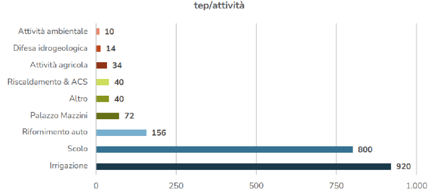
fig. 1 – Tep consumati per ogni attività del Consorzio, 2024
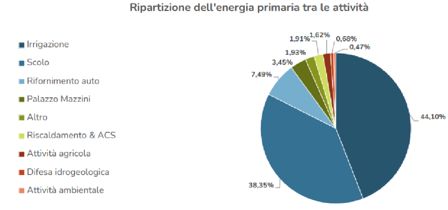
fig. 2 – Ripartizione dell’energia primaria tra le attività, 2024
Successivamente, è stata eseguita l’Analisi Energetica che ha permesso di individuare gli Usi Energetici Significativi (USE) — identificati principalmente negli impianti idrovori di sollevamento e nei sistemi di distribuzione irrigua — e di definire specifici Indicatori di Prestazione Energetica (EnPI) normalizzati rispetto alle variabili operative e meteorologiche.
Sulla base dei risultati ottenuti nell’analisi di significatività, è stato sviluppato un Programma di Miglioramento dell’efficienza energetica, da attuare nel triennio 2025-2027. Gli interventi proposti comprendono sia soluzioni di efficientamento degli impianti di irrigazione, come l’introduzione di inverter e la sostituzione di gruppi di pompaggio obsoleti, sia strategie di integrazione di fonti rinnovabili tramite la progettazione di impianti fotovoltaici a servizio delle strutture consortili.
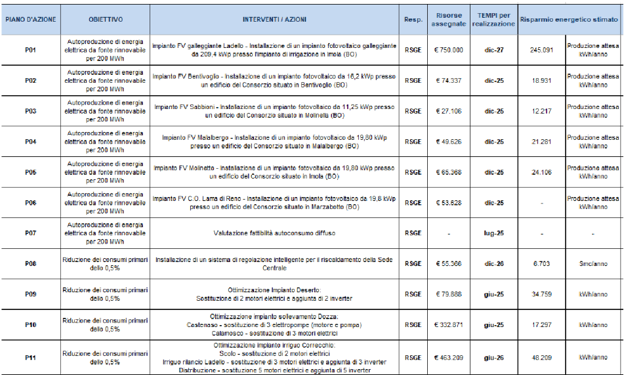
fig. 3 – Programma di miglioramento
Infine, per gli interventi conclusi, viene proposto e applicato un algoritmo per il calcolo dei risparmi ottenuti che tenga conto delle effettive caratteristiche degli impianti e degli effettivi utilizzi.
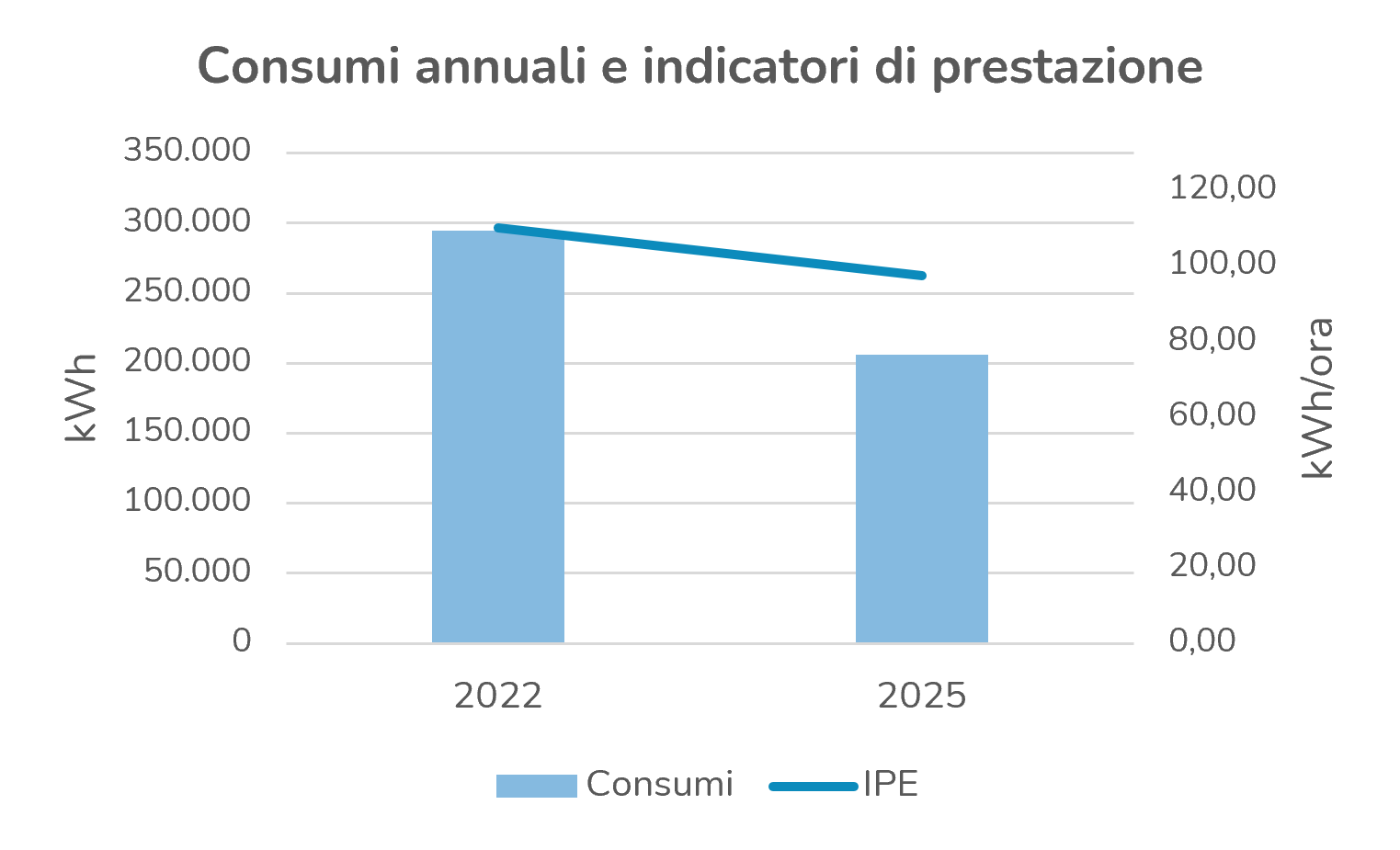
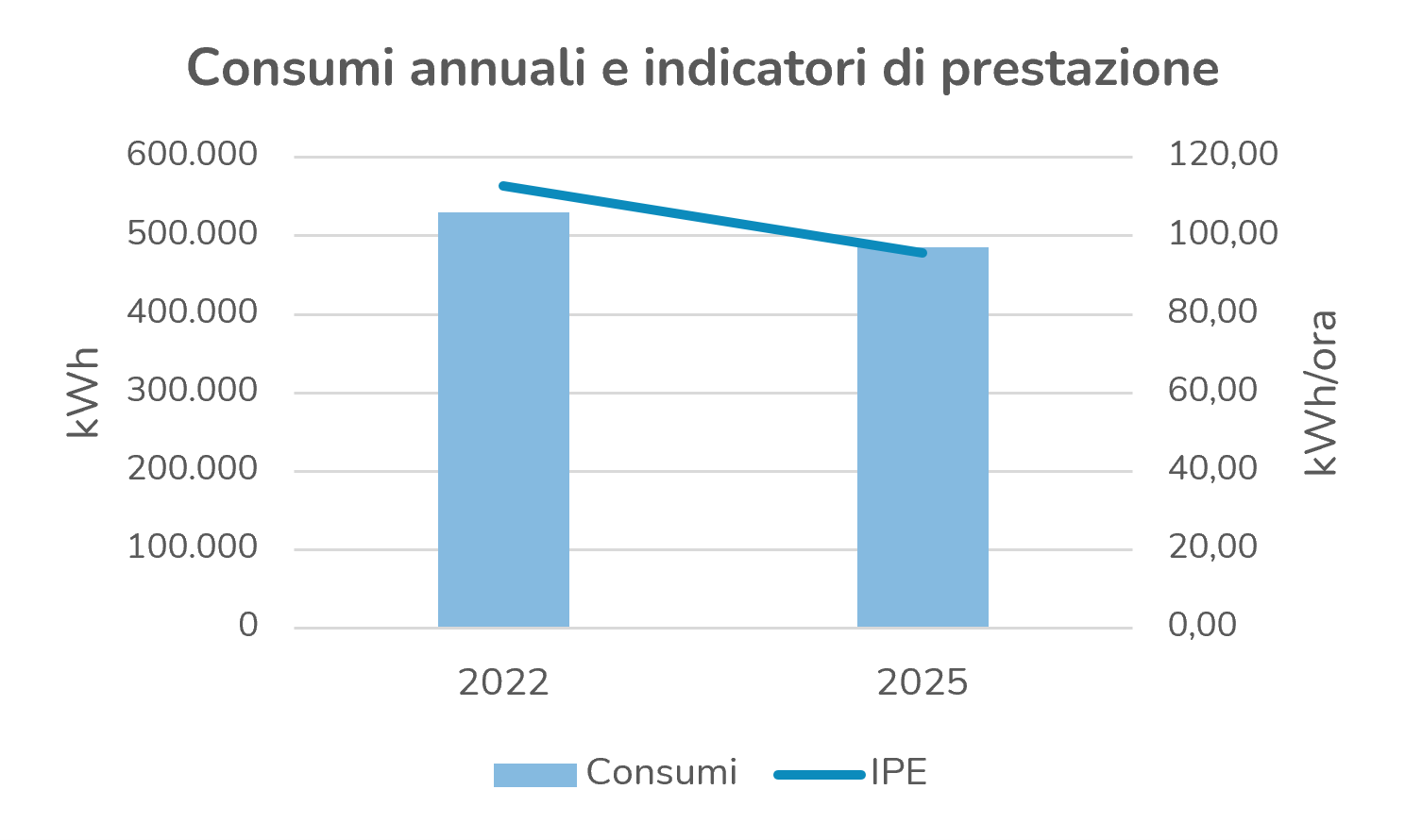
fig. 4 – Confronto tra la condizione ante e post intervento, Deserto
I risultati dimostrano come l’approccio sistemico della ISO 50001 non solo garantisca la compliance normativa dell’ente, ma costituisca uno strumento ingegneristico fondamentale per ottimizzare i costi operativi e ridurre l’impronta carbonica del servizio idrico integrato sul territorio.
FOR INTERNATIONAL STUDENT
In the context of the current energy transition and in response to the stringent decarbonization targets set by the European Union, the public sector and energy-intensive companies are called upon to set an example by quantifying their energy needs, improving the efficiency of their processes, and optimizing their energy consumption. Among these entities, Land Reclamation Authorities represent highly energy-intensive organizations, whose consumption dynamics are closely correlated to complex climatic and hydraulic variables.
This thesis illustrates the energy management activities carried out in 2024 at a Land Reclamation Authority, aimed at implementing an Energy Management System (EnMS) in accordance with the UNI EN ISO 50001:2018 standard.
The first chapter of this report outlines the climate and regulatory context in which the organization operates, presenting the latest available data on global emissions and changes in average global temperatures, as well as the strategies implemented by the European Union to address climate change.
In the second phase of the study, a detailed energy balance for the organization was prepared for the year 2024, mapping consumption from various energy sources through the collection and analysis of billing and remote control data.
Fig. 1 – Tep consumed for each Consortium activity, 2024
fig. 2 – Distribution of primary energy among activities, 2024
Subsequently, an Energy Review was conducted, which allowed for the identification of Significant Energy Uses (SEUs) — primarily identified as water lifting drainage plants and irrigation distribution systems — and the definition of specific Energy Performance Indicators (EnPIs) using operational and weather variables..
Based on the results obtained from the significance analysis, an Energy Efficiency Improvement Program was developed, to be implemented over the 2025–2027 three-year period. The proposed action plans include both efficiency solutions for the irrigation systems, such as the introduction of inverters and the replacement of obsolete pumping units, and strategies for integrating renewable energy sources through the design of photovoltaic systems to serve the authority’s facilities.
fig. 3 – Improvement programme
Finally, for the completed interventions, an algorithm for calculating the savings obtained is proposed and applied that takes into account the actual characteristics of the systems and their actual uses.
fig. 4 – Comparison between the pre- and post-intervention conditions, Desert
The results demonstrate how ISO 50001’s systems approach not only ensures regulatory compliance, but is a key engineering tool for optimizing operating costs and reducing the carbon footprint of integrated water services in the area.