

TITLE OF THE MASTER THESIS: Document control and client communication
TITLE OF THE MASTER: Project management in construction works with BIM
AUTHOR: Andrei Georgescu
TUTOR: Ing. Franchi
This dissertation is anchored in a practical, project-based operating problem: how to keep a mission critical/data center team working from the right revision, obtain timely client decisions, and preserve and auditable record then document volumes and interface complexity. Using a practice example (Chapter 5) as the organizing thread, the study shows how weak document handling (e.g., parallel version, uncontrolled email approvals, unclear system of record) translates into rework, delayed approvals, program disruption, and reduced contractual defensibility. The core proposition is an implementable control model that links document control routines, registers, and client-facing communication into one integrated project control system, improving reliability, decision traceability, and stakeholder alignment across the project life cycle.
The study’s objectives are reframed around the project example and its transferrable outputs: (1) define a practical document control operating model (daily control routine, intake validation “Gate 1”, workflow routing/escalation, controlled issuance and distribution evidence); (2) translate client management into decision-controlled practices (meeting discipline, minutes of meeting, and integrated action/decision logs); (3) show how digital platforms (Asite as an internal CDE and Procore as client-facing record) can enforce – rather than replace – governance through workflows, permissions, audit logs, and transmittals; and (4) position the Project Execution Plan (PEP) as the control document that defines roles, approval meanings, response-time expectations, escalation triggers, and information security boundaries. Although grounded in data center delivery, the resulting framework is intended to be transferable to other multi-stakeholder, high-assurance project environments.
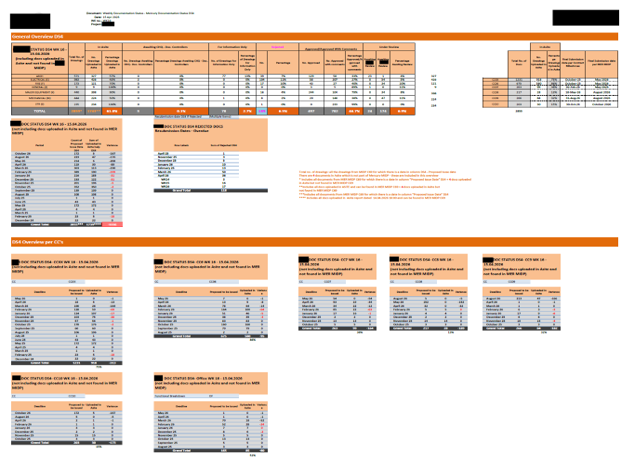
Figure 2 – Example of weekly report of documents approved, rejected, and overdue
Methodologically, the dissertation uses a synthesis-based, practice-oriented approach, with the project example providing the “test bed” for making the governance logic concrete. Academic and industry guidance is integrated with platform procedures and replicable control artifacts (e.g., deliverables/workflow/transmittals registers, Gate 1 intake validation checklist, escalation ladder, and OCR verification checks) to produce a framework that a project that a project team can implement. The analysis is tool-aware but not tool-dependent: platform are treated as enablers whose value depends on explicit definitions of information states, responsibilities, decision rights, and consistent adoption. No primary empirical data was collected; the contribution is a structured operating model and practical recommendation grounded in document procedures and observed execution needs.
This dissertation’s central argument remains “governance before tooling”, but is articulated through practical control points demonstrated in the project example. The PEP is treated as the integrating control document that sets the rules that the project team then executes daily: who owns intake validation, who may approve, what “Approved/Approved with Comments/Rejected” means, how long reviewers have, when escalation trigger, and what constitutes a formal issuance record. Within this model, controlled information states (e.g., work-in-progress, shared, published/issued, archived) are not theoretical labels; they become operational gates that prevent wrong-revision exposure and protect the trail across submissions, reviews, approvals, transmittals, and change events.
The platform analysis is presented through the operating model used in the project example: Asite function as an internal CDE for coordination and workflow driven review, while Procore supports controlled client-facing issuance and construction administration records (notably transmittals, RFIs, submittals, and drawings). The key practical findings is that both tools add value only after the project defines a system-of-record model and enforces gateway rules: (i) internal quality gates (metadata integrity, completeness, revisions checks) before external release, (ii) a single authoritative location for approvals/decisions, and (iii) consistent register/reporting logic so that status dashboards reflect reality and do not drift into “parallel truth”.
Client communication is treated as a decision-control system with explicit outputs, not as informal interaction. The project example illustrates practical mechanisms: a defined client interface (what is “official” and where it is recorded), disciplined meeting management with timely minutes, , and a single integrated action/decision log that links decisions to the relevant submissions, RFIs, and changes. Because decision latency in data center projects becomes commissioning risk, the framework ties communication discipline to measurable management information (e.g., overdue review rate, ageing of open items, cycle-time patterns, rejection/resubmittals trends, and handover readiness), enabling proactive escalation within governance forums.
The primary contribution is a practical, implementable framework-demonstrated through the project example – that links PEP- defined governance to day-to-day document control routines and platform-enabled workflow control, and then to disciplined client-facing communication. The framework provides repeatable guidance on: role allocation, document states and approval meanings, intake and issuance quality gates, register/reporting design, escalation thresholds, and adoption/onboarding as a control mechanism to protect auditability. Limitations include the absence of primary empirical validation and he dependency of platform behavior on configuration and software version. Overall, the dissertation concludes that treating information as governed project asset increases program certainty, accountability, and defendable decision making in complex project delivery.

Figure 3 – Image showing the progress on site after the approval of documents