TITLE OF THE MASTER THESIS: Integrated contruction management in hybrid – scope industrial projects, contractual claim management during crisis
TITLE OF THE MASTER: Project and Contract Management in Construction Works
AUTHORS: Eng. Çağlar ŞANLI, Eng. Eda BEKAR
TUTOR: Eng. Giovanni Franchi
The global industrial construction sector is undergoing a profound transformation driven by increasing project scales, fragile supply chains, and growing geopolitical uncertainties.
Under such conditions, traditional project management paradigms are often insufficient to ensure operational stability and contractual protection in complex industrial megaprojects.
This challenge becomes even more critical in megaprojects located in extreme environments such as Arctic LNG 2, where engineering complexity is compounded by severe operational constraints.
The fundamental motivation for this thesis stems from the hard-learned lessons of the project’s preceding phases, GBS 1 and GBS 2. The application of the traditional “Stick-Build” methodology in harsh Arctic conditions led to continuous disruptions, maximizing “Waiting” waste and creating a cycle of high-cost “Rework,” both of which are the arch-enemies of the Lean philosophy. This operational deadlock forced a radical strategic decision for the GBS 3 unit (the focus of this study, encompassing Saren A1 and Top slab packages): to abandon the construction site and relocate production to a controlled factory environment.
Modular Strategy and Integrated Construction Management
This study provides an in-depth analysis of the transition to a “Radical Modular Manufacturing” strategy, where high-risk site operations were moved to highly controlled workshop environments. It examines the Integrated Construction Management (CM) methodology that orchestrated this transition.
However, in this thesis, CM is redefined not merely as an “execution tool” for managing work, but as a proactive “Contractual Resilience Mechanism” designed to ensure the organization’s survival in the face of unforeseen crises. This transformation served as a shield, protecting not only the project’s technical success but also its financial and legal integrity.
Managing this complex structure, which we define as “Hybrid-Scope” intertwining EPC-like modular manufacturing with on-site assembly required transcending traditional planning approaches. The CM team placed the principle of “Constructability” at the center of the design process to ensure the project’s destiny was not left to chance. In this process, the project’s Digital Twin (BIM) evolved from a mere visual reference into a simulation laboratory where potential site issues were resolved at the design stage.
Digital Engineering and Production Optimization:
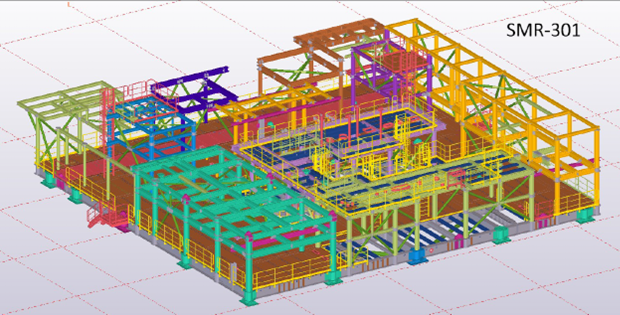
Figure 1: Visual evidence of DfM optimizations performed on the Digital Twin and the “zero-cost” error prevention process.
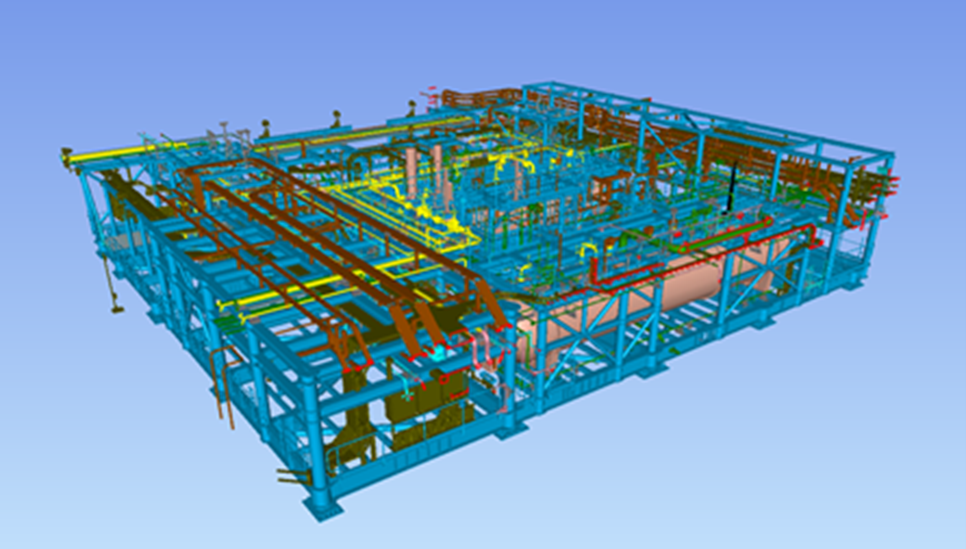
Figure 2: Digital Twin structural model representing one of the most complex structural modules analyzed during the design optimization process.
Specifically, through “Design for Manufacturability” (DfM) analyses, complex welding details in critical structural components such as Welded Plate Girders and Filler Beams were simplified; thereby, potential quality defects and time losses likely to occur on-site were eliminated in the digital environment before a single piece of steel was cut.
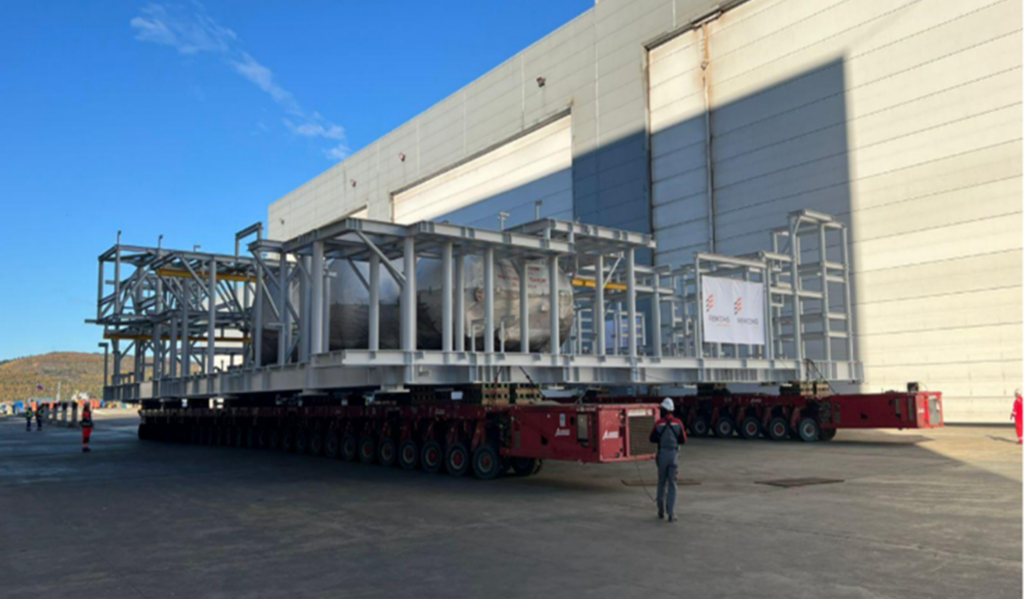
This proactive approach enabled the mathematical planning (Feasibility Studies) of high-risk operations, such as the safe lifting and transport of massive 850-ton modules, with precision.
On the production floor, chaos was replaced by a disciplined flow orchestrated by the “Advanced Work Packaging” (AWP) methodology. Production was transformed from a random sequence into a structure “Pulled” (Pull System) by the priorities of the final assembly site (GBS 3). The synchronization of material, labor, and information flow in this manner eliminated unproductive waiting times in the workshops and guaranteed that the project progressed “healthily” and “on the planned route” leading up to the crisis moment.
Crisis Event and Contractual Implications
The project’s ultimate test arrived with the instruction for the “Suspension of Works” due to Geopolitical Force Majeure. This instruction meant more than just halting work on site; it threatened to drag the project’s financial and legal future into uncertainty.
It was at this precise moment that the “proactive management” and “data discipline” meticulously implemented by the CM team transformed into the project’s greatest defensive weapon.
Data-Driven Claim Defense
The thesis reveals how ordinary data, collected during operational processes merely to “track work,” transformed into a vital “Chain of Evidence” during the crisis.
The Cost (CPI) and Schedule (SPI) performance indices, monitored instantly by the CM system prior to the crisis, consistently hovered around the 1.0 (Perfect Alignment) level. This dataset became the indisputable, mathematical proof that the Contractor managed the project “under full control” and efficiently.
Similarly, the high “First Time Through” (FTT) rate of 99.2% achieved through quality management (ITP/NCR), along with the safety success of over a million of “Lost Time Injury-free” (LTI-free) man-hours, refuted any potential claims of “management weakness” or “poor quality” by the Employer before they could even be brought to the negotiation table.
Built upon this robust dataset, the “EVM Shield” combined with legal notification processes (Notice of Claim) to form a formidable line of defense. The “Cost Impact Analysis” (CIA) transparently demonstrated that more than 60% of the claimed compensation stemmed not from Contractor inefficiency, but from fixed costs arising from “contractual obligations” (such as heating, preservation, and storage) that continued despite the halt in production.
Strategic Contribution
Consequently, this thesis redefines the role of Integrated CM in modern industrial projects. CM is not just a mechanism that “Executes” the work; it is a strategic intellect that “Protects” the work, “Contextualizes” the data, and keeps the organization “Resilient” against crises.
The Saren A1 project stands as the most concrete example proving that operational efficiency and contractual security are not opposing goals, but rather a unified whole that feeds into each other and rescues the company in times of crisis.