

TITLE OF THE MASTER THESIS: Claims in the execution phase of public contracts in Italy: tools for risk management and dispute prevention
TITLE OF THE MASTER: Contract, claim and delay management in construction works
AUTHOR: Martina Tomei
TUTOR: Eng. Giovanni Franchi
- OVERVIEW OF THE THESIS
This thesis examines the execution phase of public works contracts in Italy, with particular emphasis on the role of claims as instruments for risk management and dispute avoidance. The execution phase represents one of the most critical stages in the lifecycle of a public infrastructure project, as it is characterised by high technical complexity, the involvement of multiple stakeholders, and significant exposure to operational, financial and time-related risks.
Within the regulatory framework established by EU directives, up to Legislative Decree No. 36/2023 and its corrective measure, Legislative Decree No. 209/2024, the study analyses the function of claims not only as a legal safeguard, but also as an operational tool for the identification, recording and management of issues arising during project delivery. From this perspective, claims are interpreted as a mechanism capable of linking technical events to their financial consequences, thereby supporting progress control and preserving contractual equilibrium.
The analysis further investigates the main categories of claims, their formulation and management within the works accounting system, and their role within the project’s financial control framework, including their interaction with revenue recognition principles under IFRS 15. Particular attention is devoted to the need for a multidisciplinary approach integrating engineering, commercial and legal expertise, as well as to the relationship between claims management and Alternative Dispute Resolution (ADR) mechanisms, such as amicable settlement, negotiated agreements, arbitration, and the Technical Advisory Board (Collegio Consultivo Tecnico). To support the theoretical framework, the thesis presents a case study concerning the construction of the Naples–Bari high-speed/high-capacity (HS/HC) railway line, specifically the Frasso Telesino–Telese section, focusing on a value engineering variation that gave rise to a dispute regarding the allocation of cost savings.
The case is analysed throughout the entire process, from the submission of the claim to the determination issued by the Technical Advisory Board, highlighting its application in other projects, particularly in the Florence high-speed railway bypass, where the adopted solutions for the Frasso Telesino–Telese section have acted as an operational precedent for the management of similar situations.
- KEY FINDINGS OF THE THESIS
The analysis shows that claims management constitutes a central element in the management of the execution phase of public works contracts. When properly prepared — in a timely, well-documented and technically substantiated manner — claims do not represent a mere formal requirement, but a substantive control mechanism capable of ensuring transparency, traceability and the protection of contractual balance.
The thesis highlights that the main issues arising during the execution phase are not primarily due to regulatory gaps, but rather to implementation difficulties and insufficient coordination between technical, commercial and legal dimensions. In this context, claims assume a systemic function: they enable the timely identification of issues, support cost and schedule monitoring, and contribute to dispute avoidance. A further key finding concerns the role of Alternative Dispute Resolution (ADR) mechanisms, in particular the Technical Advisory Board (Collegio Consultivo Tecnico), which is confirmed not only as a dispute resolution mechanism, but also as a source of interpretative guidance for the management of subsequent cases.
The case study demonstrates that a favourable determination may generate positive effects beyond the individual contract, facilitating faster and more efficient negotiated settlements in other projects. The analysis also shows a progressive shift from adversarial approaches to more collaborative forms of dispute management. The consolidation of operational practices and interpretative guidance, together with a proper structuring of claims, enables similar situations to be addressed in a preventive manner, thereby reducing reliance on formal litigation.
In conclusion, the integrated and multidisciplinary management of claims — involving engineering, commercial and legal expertise — represents a key factor in the efficiency of public works contracts. It not only safeguards the interests of the parties but also contributes to the overall improvement of the system, promoting a more transparent, balanced and conflict-preventive model of project execution.
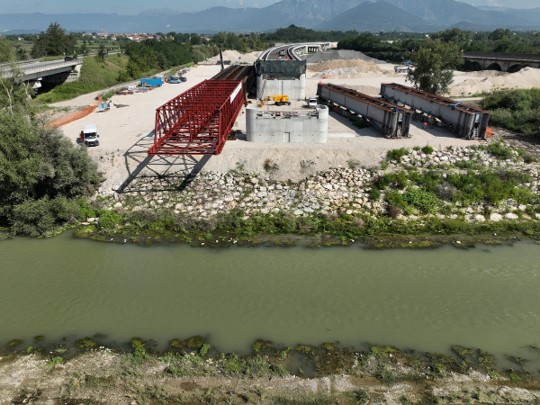
Figure 1- Viaduct launching – Frasso Telesino Telese
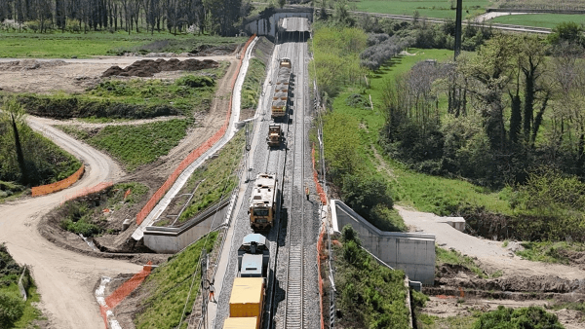
Figure 2 – Railway line section – Frasso Telesino Telese
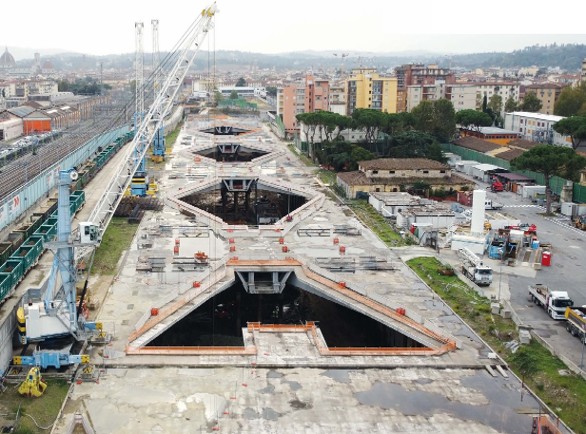
Figure 3 – Execution of high-speed railway station works – Nodo Firenze