
Master: Contract, claim and delay management in construction works
Author: Eng. Caudio Costanzi
Tutor: Eng. Giovanni Franchi
Force majeure has always been a central topic of civil law and of the entire regulatory discipline of procurement, whose diverse and articulated implications diverge depending on common law or civil law systems, with further differentiations, especially in Italy, in public procurement as opposed to that regulated by private law.
The allocation of the risks of external events capable of impacting not only on works already completed and not yet accepted by the client, but also on the very feasibility of what is envisaged in the project due to the change in the state of the sites is a crucial aspect, especially in complex projects with long execution deadlines. The regulation of force majeure must, therefore, be regulated with the utmost care at contractual level (as it is necessary to do in common law systems, substantially lacking a regulatory discipline of force majeure) or, at least, at legislative level (as it is in civil law systems). As will be said, the discipline cannot, however, be limited to regulating the obligations required of the parties in the immediacy of the event, but rather must provide a global definition of the conditions, limits and obligations to ensure the preservation of the contract and the restoration of the original equilibrium upon the occurrence of certain unforeseeable and unavoidable events.
The thesis aims to offer a concise, but accurate preliminary reconstruction of the concept of force majeure from Roman law to date, giving an account in the first chapter of the different declinations that it has taken on in some of the main European legal systems (the United Kingdom, France and Germany, in primis) with particular reference to its application to works contracts. The peculiarities achieved by the Italian legislation, although in continuity with the Roman tradition and the French Civil Code, are then examined in the second chapter, in which the focus is on the identification of legal solutions for the continuation of a works contract affected by a force majeure event, comparing the different tools available to the private system as opposed to the public system. The latter, in particular, has always had peculiarities with regard to the regulation of force majeure events and the consequences on existing contracts, all attributable to the public nature of the contract and the interests involved. The evolution that the institution of force majeure has undergone in the course of the most recent public contract codes will thus be taken into account, with particular regard to the strict time limitation regime for the contractor’s reporting of force majeure damages and, above all, the effects of such events on the contract and the project. The analysis then considers the regulation of contractual variants, with the peremptory nature of the prerequisites and the qualitative and quantitative limits to changes in the project. Similarly, in order to provide all the tools necessary to fully understand the case study of the contract for the doubling of the Tenda Tunnel dealt with in the third chapter, particular attention will be dedicated to the possibility that the occurrence of a force majeure event may determine variations well in excess of the so-called fifth obligation, with the consequent need for the client to determine whether or not to continue the contract, by means of a complete renegotiation. It is precisely to renegotiation that the final part of the chapter is dedicated, where the long path – at first only jurisprudential, then also legislative – towards the affirmation also in Italy of a real right and obligation to renegotiate in order to preserve the contract in the event of the occurrence of events or factors capable of irreparably altering the contract’s synallagmatic balance is rediscovered. The right and obligation to renegotiate, now also established by the new Art. 9 of Legislative Decree 36/2023 found application, although not without difficulty, in the case study to which the third chapter is dedicated. Overall, the chapter emphasises the importance of renegotiation in both private and public contracts, calling for a systematic approach to the management of these events to ensure fairness and the continuation of projects, particularly in public procurement, where the public interest in the proper use of funds and the impact on local communities requires that contract termination and the ensuing litigation should be avoided.
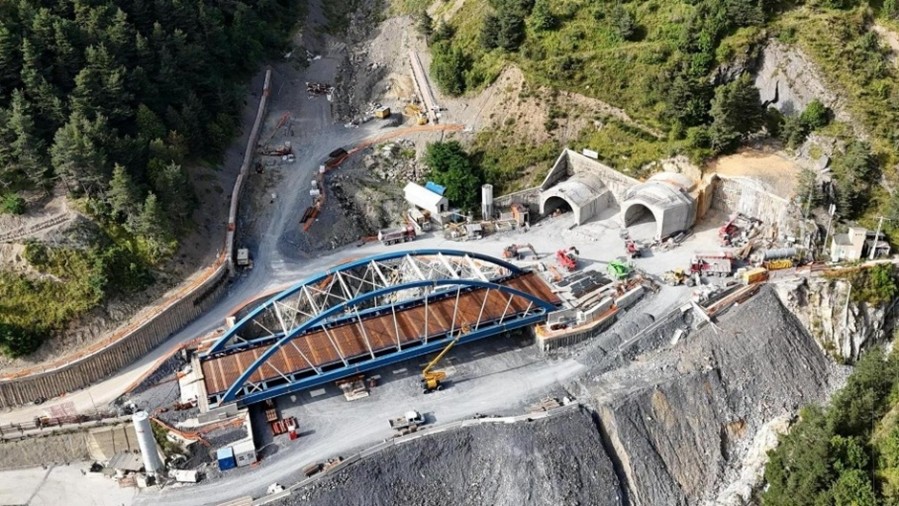
Using the tools summarised in chapter two, chapter three examines the contract for the doubling and renewal of the Tenda Tunnel, the first tunnel connection between Italy and France in history. After some critical issues at the contractual level, which led to considerable delays, the termination of the contract at the expense of the previous contractor and the takeover of a new contractor in 2019, in October 2020 the Tenda Tunnel was hit by a double catastrophic event (flood and landslide) that destroyed part of the works already completed on both the Italian and French sides and made it impossible to complete what had been planned in the original project. The chapter examines the legal and technical challenges that followed, from those related to the immediate reporting of damages, to the far more complex and unique challenges of dealing with the client to identify design solutions to allow the work to be completed, to the identification of legal instruments to allow their adoption and the resumption of work in the absence of clear contractual indications. The chapter analyses, therefore, each of these phases, focusing in particular on the renegotiation process, which took place in two macro-phases over a period of four years, up to the definition of the new temporal and economic conditions of the assignment, with the inclusion of new works and the complete elimination of the boring of the historical tunnel.
This work provides an extraordinary opportunity to analyse, even if briefly, how such a complex renegotiation was conducted without the effective support of the belatedly constituted Technical Advisory Board (i.e. “Collegio Consultivo Tecnico”), whose role in the process is critically assessed, revealing its limited influence on the resumption of work and the definition of new contractual conditions to restore the original balance.
Thanks also to the case study analysed, the thesis highlights the critical role of renegotiation in construction contracts affected by force majeure events, particularly in the case of complex public contracts, promoting the definition of an increasingly flexible and adaptable contractual legal framework that allows for the equitable resolution of disputes in order to ensure the continuity of projects. The study therefore suggests a more structured approach to force majeure events in construction law, particularly in Italy, in order to mitigate the risk of project blockages through a comprehensive contractual framework capable of charting the course for the parties in the face of disasters such as the one that affected the Tenda Tunnel.
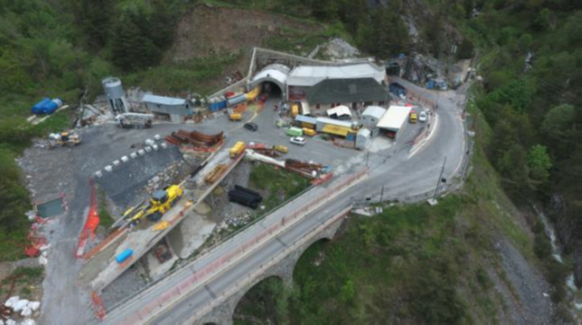
Fig. 1 – Tunnel access on the French side (2019)
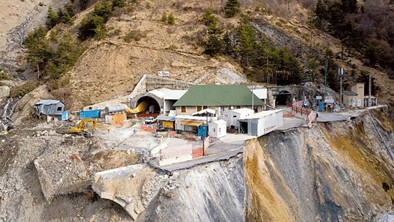
Fig. 2 – Access to the tunnels on the French side post-Storm Alex (End of 2020)
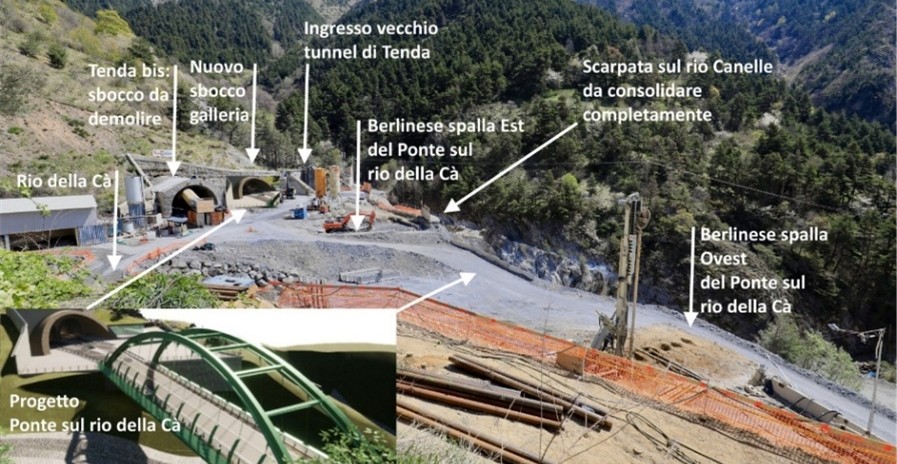
Fig. 3 – Detailed layout of the France side entrance – Variant ‘Alex’ (2023)