
MASTER – PROJECT MANAGEMENT IN CONSTRUCTION WORKS WITH BIM
AUTHOR – ANU KUMAR
TUTOR – Ing. FRANCHI
The rapid evolution of urban infrastructure has emphasized the need for smarter, sustainable, and highly coordinated building processes, especially in high-security government infrastructure.
THE SPG Residential-cum-Training Complex in Dwarka, New Delhi, serves as a strategic facility combining secure lodging, training, and administrative operations for India’s elite protective force spread over an area of 24.6(99552.668 metre square) acres land.
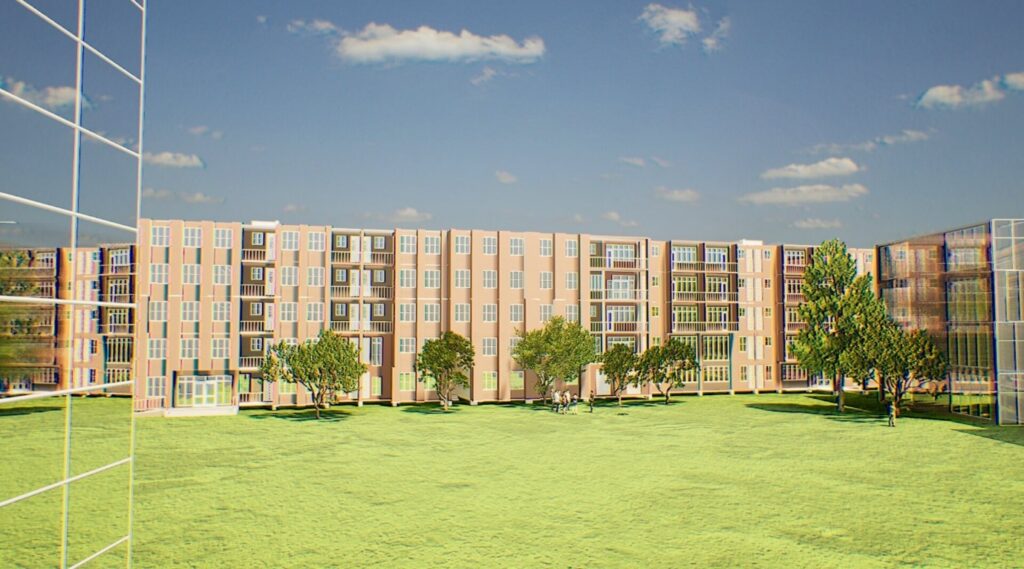
Within this complex, THE TRAINING HOSTEL of an area 1273.92metre square for Senior Officers (SOs) and Senior Administrators (SAs) was initially conceptualized and designed using traditional CAD-based workflows.
This thesis focuses on the transformation of the SPG TRAINING HOSTEL BLOCK from traditional CAD-based documentation to a fully coordinated BIM (Building Information Modelling) process using tools like Autodesk Revit, Navisworks Manage, and Primavera P6. The need to modernize the facility and align with national mandates on digital construction led to the BIM transformation of this project. The objective was to evaluate how BIM tools and workflows—such as Autodesk Revit, Navisworks Manage, and Primavera P6—could replace fragmented and error-prone traditional methods with an integrated, coordinated, and information-rich model environment.
The BIM process adopted in this study involved multiple stages-
Integration of legacy CAD data into Revit for 3D parametric modelling at LOD 300 ensuring architectural, structural, and partial MEP systems were coordinated.
Development of site massing models to study zoning, ventilation, and spatial organization across the 24.6-acre site.
Clash detection using Navisworks Manage, which helped identify and resolve over 120+ coordination issues across disciplines before construction began
4D simulations by linking the model to Primavera P6, enabling time-based visualization of construction activities for better sequencing and planning.
Automated quantity take-offs and material scheduling from Revit models to generate accurate BOQs and improve cost estimation.
Visualization outputs and walkthroughs using Twin motion for better stakeholder engagement and faster approvals.
Results showed significant advantages: Coordination efficiency improved by 40%, reducing manual drawing overlay efforts.
Estimated cost savings of 8–12% were achieved by minimizing rework due to design clashes.
Construction scheduling was enhanced by 4D planning, reducing idle time and resource conflict.
Quantity estimation from the model showed 95–98% accuracy when compared with DPR data.
Visualization and stakeholder communication improved significantly, accelerating design approvals.
This structured workflow not only optimized project delivery but also created a data-rich model that can be used for facility management in the future (potential LOD 500 upgrade).
Conclusions & Lessons Learned-
BIM is far superior to traditional CAD-based workflows, particularly in complex, multi-disciplinary projects such as the SPG Training Hostel.
Clash detection, quantity estimation, and real-time visualization improved coordination, reduced errors, and saved costs.
Integration with Primavera P6 enhanced project management by aligning construction sequencing with model elements.
BIM models are not just design tools—they serve as a central digital repository for design, planning, execution, and potential maintenance phases.
The LOD 300 model allowed for accurate drawing generation, data-linked schedules, and visual communication—serving as a single source of truth for all stakeholders
Key Lessons Learned- The successful execution of this thesis would not have been possible without the knowledge, tools, and structured methodology acquired during my Master’s in Project Management with BIM from polimi. The program provided me with a solid foundation in understanding the digital transformation of construction practices, interdisciplinary collaboration, and lifecycle-based project planning.
Early BIM adoption is critical. Retrofitting legacy CAD data is time-consuming and lacks some parametric intelligence. Future projects should integrate BIM from the concept stage. Cross-disciplinary training is essential. Project success depends on all teams (architects, engineers, planners) understanding BIM workflows and responsibilities. Software interoperability matters. Seamless data exchange between Revit, Navisworks, and Primavera was key to project success—but required strict adherence to shared coordinates and naming standards. BIM can drive a culture of collaboration
In summary, this thesis demonstrates that BIM is not merely a digital design upgrade, but a transformative project management tool. Through this case study of the SPG Training Hostel, it establishes a replicable, scalable model for future government infrastructure modernization using BIM across India and beyond.
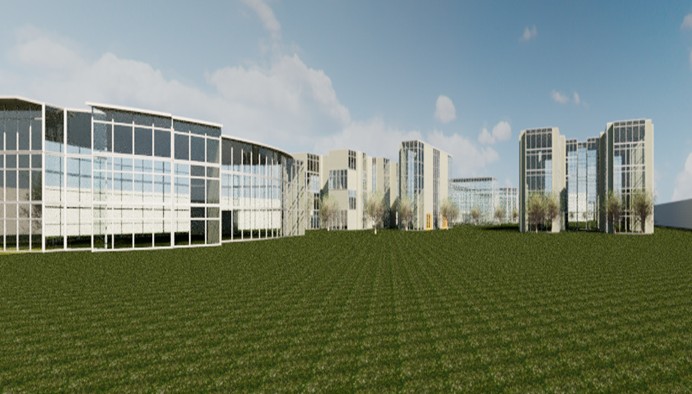
- External reconstruction
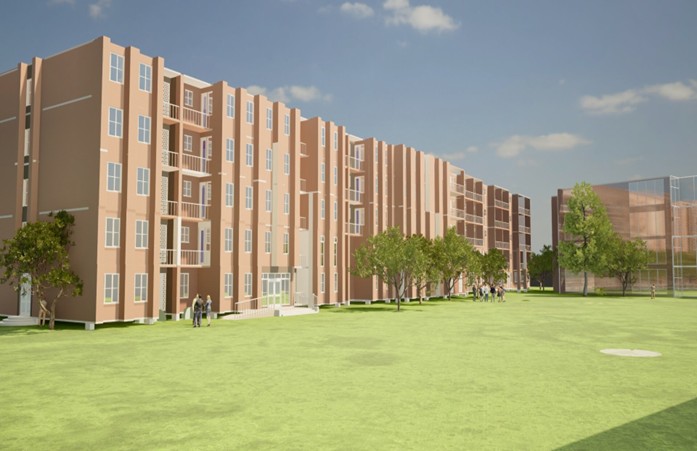
2. External reconstruction