MASTER: Project management in construction works with BIM
AUTHOR: Arch Jivian I. J. Halaseh, Ahmad S. Abuanzeh
TUTOR: Eng. Giovanni Franchi
The construction sector is experiencing a profound digital transformation, driven by the integration of Building Information Modeling (BIM) and Artificial Intelligence (AI). This thesis examines how these technologies are revolutionizing both architectural design and project execution by introducing intelligent automation, enhanced data-driven decision-making, and collaborative digital environments.
The study is structured around two core dimensions. The first focuses on AI-driven BIM applications in architectural design, especially in the early stages of complex high-rise developments. It explores how parametric modeling, environmental simulations, and generative design tools enhance creative exploration and performance evaluation. The second dimension addresses the use of BIM in construction and project management, emphasizing coordination strategies, 4D scheduling, stakeholder communication, and digital quality control.
To support this investigation, the thesis presents four real-world case studies that demonstrate how BIM and AI were applied in different phases and project types:
- The Doha Tower project showcases AI-assisted conceptual design and environmental responsiveness.
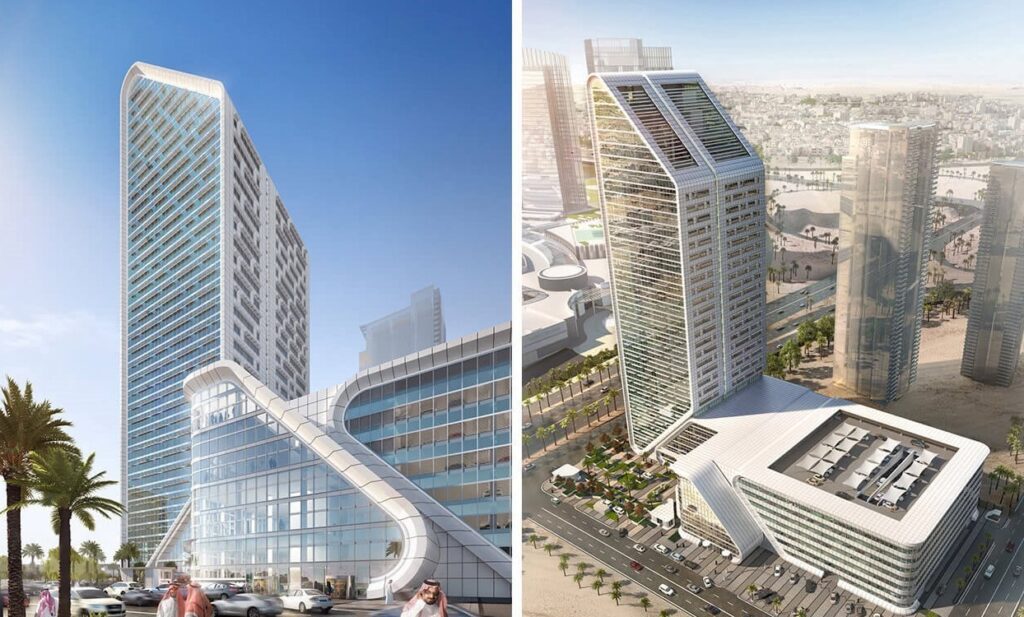
- The SABB Headquarters in Saudi Arabia illustrates digital coordination, clash detection, and BIM-driven automation in the documentation stage.
- The CMA Residential Villa in Canada highlights BIM-led project management, QA/QC processes, and model validation.
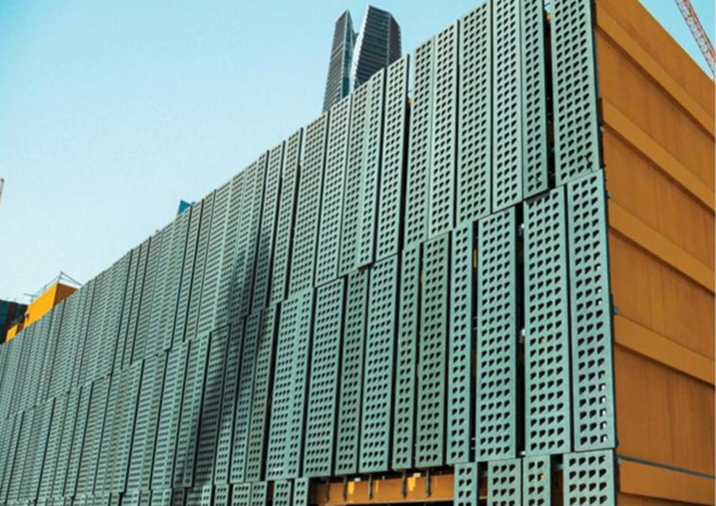
- The KAFD Car Park Buildings in Riyadh focus on execution-stage BIM management, including the use of BIM Execution Plans and stakeholder alignment tools.
Across these projects, platforms such as Autodesk Revit, Dynamo, Navisworks, Insight, and Forma were integrated with AI-enhanced tools like Deep Seek and Open AI-powered scripts. This enabled more intelligent modeling, faster iteration cycles, and improved project outcomes throughout design and construction phases.
AI tools are redefining early design decision-making by enabling rapid scenario testing and performance optimization. Generative design workflows, rule-based automation, and real-time feedback mechanisms significantly enhance the speed and quality of architectural output.
BIM proved to be an effective coordination platform across all disciplines, supporting efficient communication, reducing errors, and streamlining workflows. The integration of automated clash detection and document management improved accuracy and shortened approval cycles.
The practical case studies validate that BIM and AI integration is not only feasible but highly beneficial. From early-stage conceptual design to on-site coordination, their application led to measurable improvements in cost control, time management, and sustainability targeting, including LEED-related strategies.
Importantly, AI complements rather than replaces professional expertise. The thesis reinforces the notion that technology serves as a powerful enabler when guided by skilled project teams who understand context, quality, and client goals. Looking ahead, the future of BIM management lies in predictive analytics, full-lifecycle modeling, and integrated cloud-based collaboration. BIM Managers will increasingly act as data strategists, using dashboards and AI insights to manage complexity, anticipate risks, and drive informed decision-making across the project lifecycle.
The integration of BIM with modern project management methodologies is poised to redefine the way construction projects are conceived, delivered, and sustained. As the industry transitions toward a more data-centric, automated, and collaborative workflow, significant improvements in cost control, operational efficiency, and project reliability are expected. Firms that proactively embrace digital innovation and align with these technological advancements will position themselves as leaders in the rapidly transforming construction sector.
Figure 1: Lusail Marina Tower – Doha, Qatar 23-storey mixed-use tower with offices, retail, spa, gym, and guesthouse. Site area: 7,400 sq.m. GFA: 21,800 sq.m. FAR: 2.95. Height: 96 m.
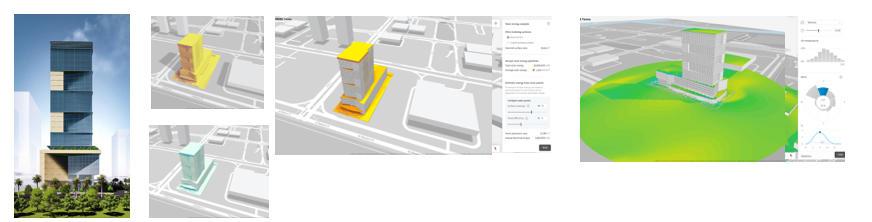
Figure 2: SABB Headquarters Tower – Saudi Arabia 30-storey commercial office tower. Site area: 8,500 sq.m. GFA: 39,500 sq.m. FAR: 4.65. Height: 135 m.
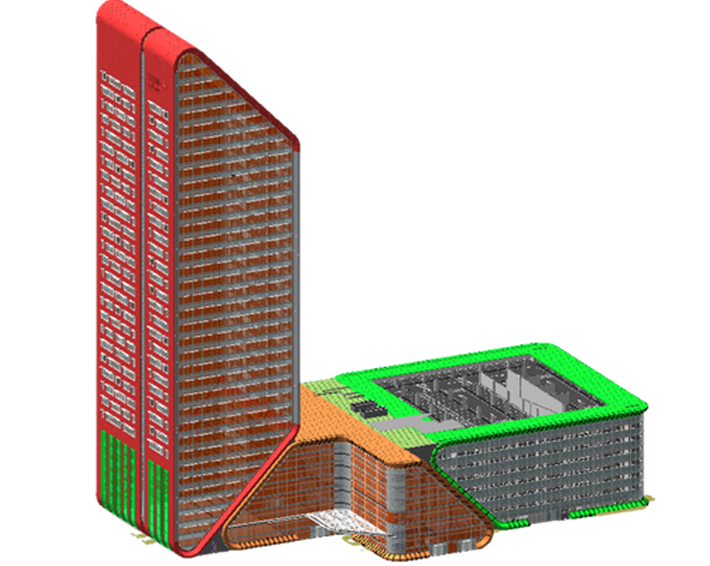
Figure 3: CMA Residential Villa – Canada
Luxury villa with basement and amenities. Site area: ~1,800 sq.m. GFA: 2,800 sq.m. FAR: 1.8. Height: 2 floors + 1 basements
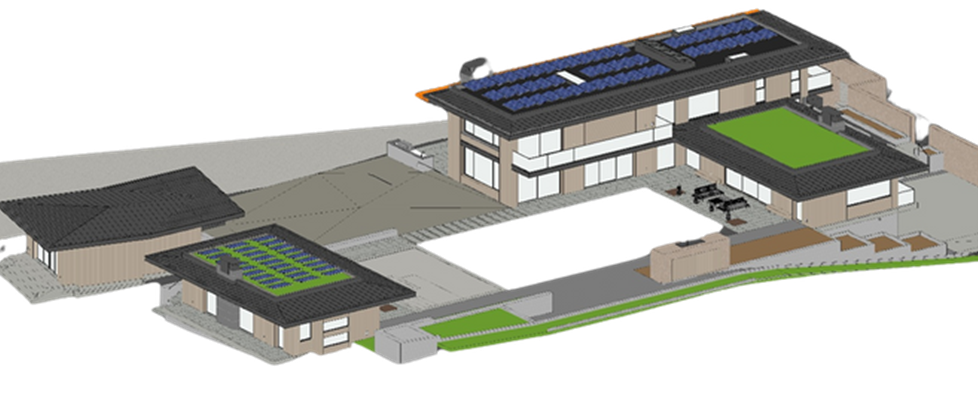
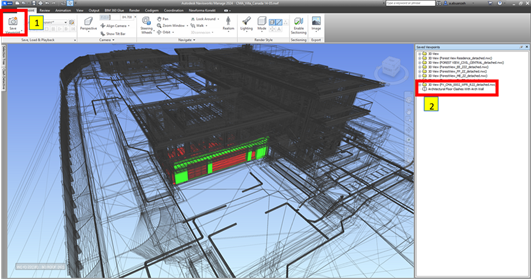
Figure 4: KAFD Car Park Buildings – Riyadh, Saudi Arabia
multi-level parking complex with rooftop landscape. Site area: ~22,000 sq.m. GFA: 85,000 sq.m. FAR: 3.86. Height: 5 above-ground levels + 4 basements