

Master: Project management in construction works with BIM
Author: Eng. Zacharoula Gkorou
Tutor: Eng. Giovanni Franchi
As the construction industry evolves, Building Information Modeling (BIM) has emerged as a transformative methodology for optimizing project management. We explore the integration of BIM with project management practices to enhance efficiency, sustainability, and coordination in construction projects. The study is centered around the development of Villa Blanc in Athens, Greece.
In this thesis, we will focus on the construction project of Beach Villa 1.2.4, “Villa Blank.” In this project, we will apply the rules and methods learned in this postgraduate program to utilize the BIM methodology for project design and management, compose the Exchange Information Requirements (EIR) directive, and employ the digital tools provided by Politecnico di Milano for these purposes.
The overall vision of this project is:
• To use BIM methodology in all aspects and stages of the project
• To minimize the cost and time for the construction via these new methods
• To deliver an as built BIM adequate for the needs of FM partner
Business Objectives
• To deliver the construction project reducing time schedule by at least 20%.
• To minimize the cost by 15%. This is due to reducing design revisions during construction and improving procurement due to BIM.
• To provide to the customer an integrated BIM ready for use by the FM contractor.
Technology Objectives
List the technology-specific objectives to be achieved. For example:
• Use BIM tools for design, precost and procurement, time schedule and coordination of working teams.
• Build CDE for all involved companies and teams
The research begins by outlining the increasing complexity of modern construction projects and the necessity for advanced management methodologies. BIM serves as a solution by providing a centralized, digital representation of a building’s physical and functional characteristics throughout its lifecycle. This allows for improved collaboration among stakeholders, real-time data sharing, and streamlined decision-making.
The methodology of this study involves a comprehensive analysis of project integration management with BIM, covering key areas such as project planning, execution, monitoring, and control. A major focus is placed on the Exchange Information Requirements (EIR) framework, which defines the necessary data management protocols to ensure smooth coordination among project teams.
A significant component of the research is the Project Charter, which establishes the foundation for project planning and execution. The charter outlines the project’s purpose, scope, objectives, and success criteria, ensuring alignment among all stakeholders. It defines the roles and responsibilities of team members, details risk management strategies, and provides a structured framework for decision-making throughout the project lifecycle. By integrating BIM principles within the Project Charter, this study demonstrates how digital methodologies can enhance project clarity, accountability, and efficiency.
A critical aspect examined in the thesis is the impact of BIM on cost estimation, risk management, and clash detection. By utilizing digital models, the study demonstrates how potential conflicts in design can be identified and resolved before physical construction begins, reducing delays and cost overruns. Additionally, the study explores the benefits of 4D BIM for scheduling with BEXEL Manager, 5D BIM for financial tracking, and 6D BIM for facility management, all contributing to a more holistic approach to project management.
Villa Blanc serves as a case study illustrating the practical application of BIM in a real-world project. The integration of BIM within the project’s lifecycle, from conceptual design to construction and handover, showcases its potential to enhance project efficiency. Specific methodologies such as Common Data Environments (CDEs) and automated workflows are examined, emphasizing their role in ensuring data consistency and project transparency.
The findings indicate that BIM significantly enhances project performance by improving communication, reducing errors, and facilitating better resource allocation. The study also highlights the challenges of BIM adoption, including the need for specialized training, software investments, and changes in traditional project workflows.
In conclusion, this research underscores the necessity of BIM integration in modern project management practices. The case study of Villa Blanc exemplifies the tangible benefits of BIM, reinforcing its role as a fundamental tool for future construction projects. By bridging the gap between project management and digital modeling, BIM is poised to become an industry standard, driving efficiency and innovation in the built environment.
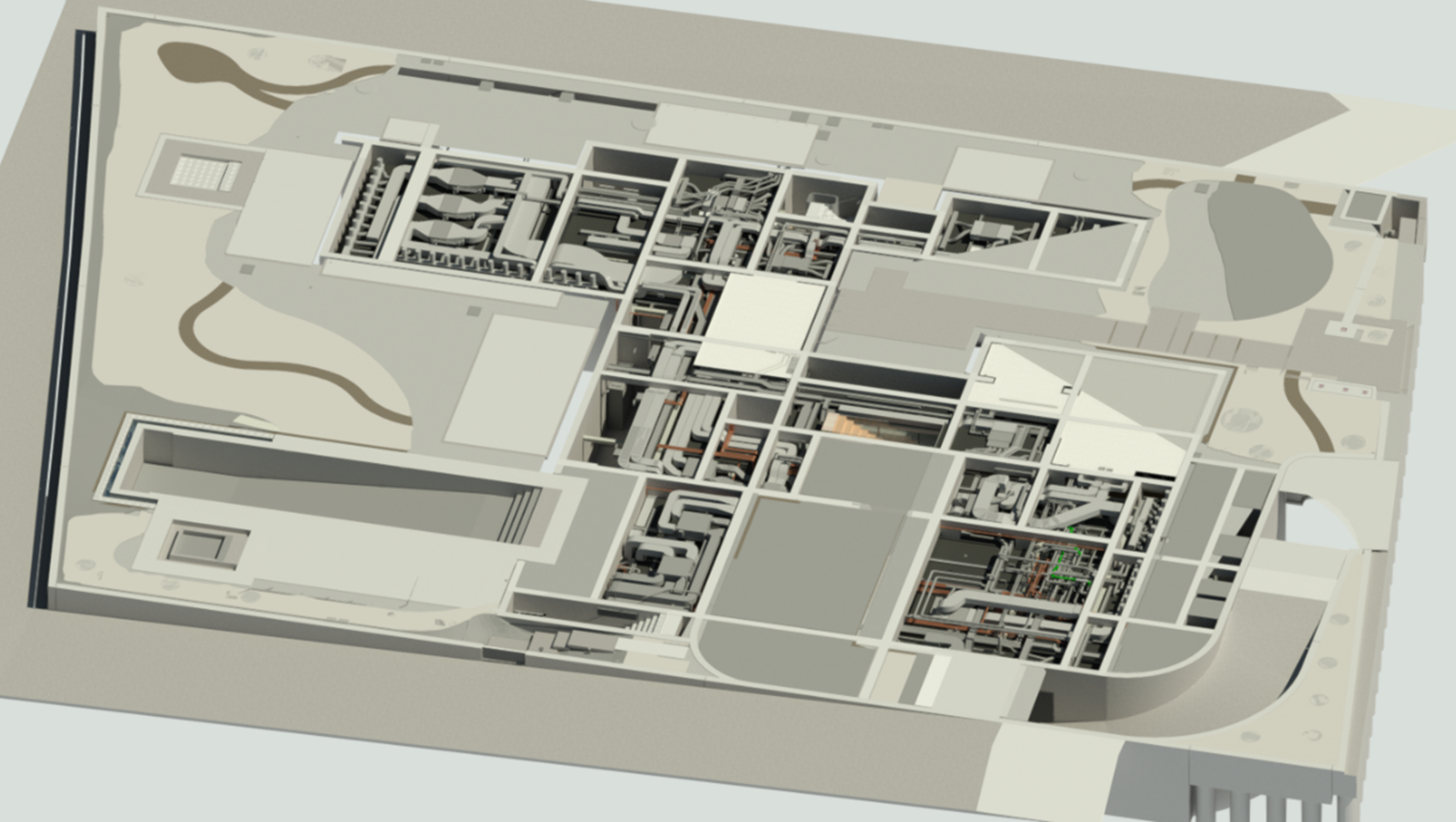
Figure 2 Basement Installations Render
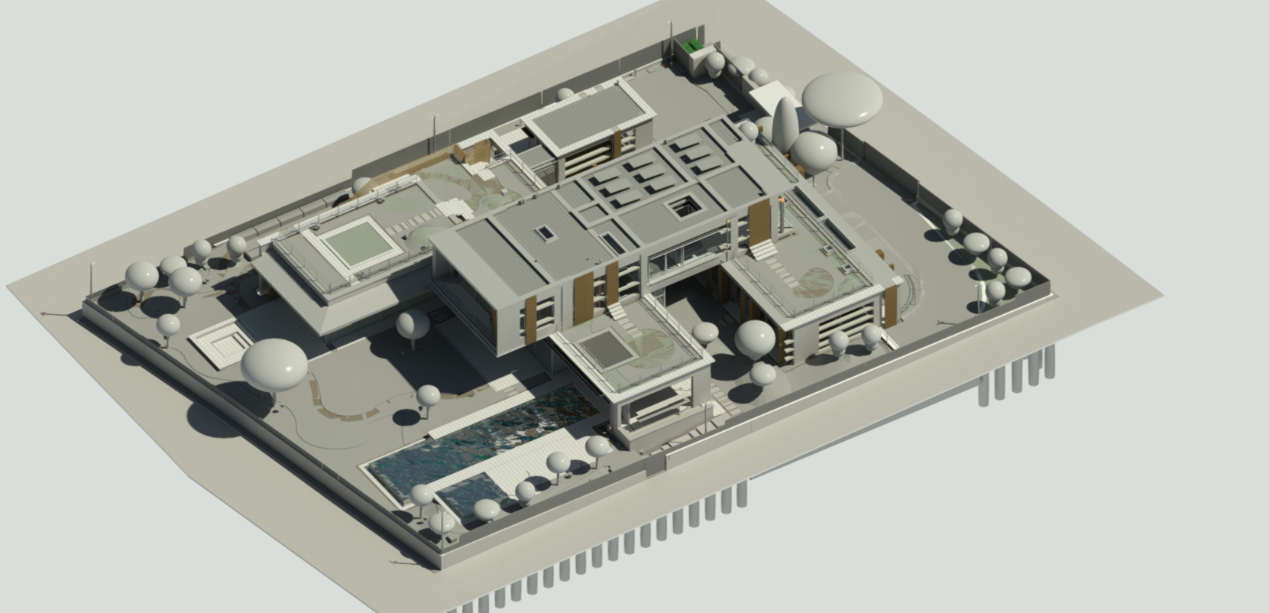
Figure 3 Coordination BIM Model
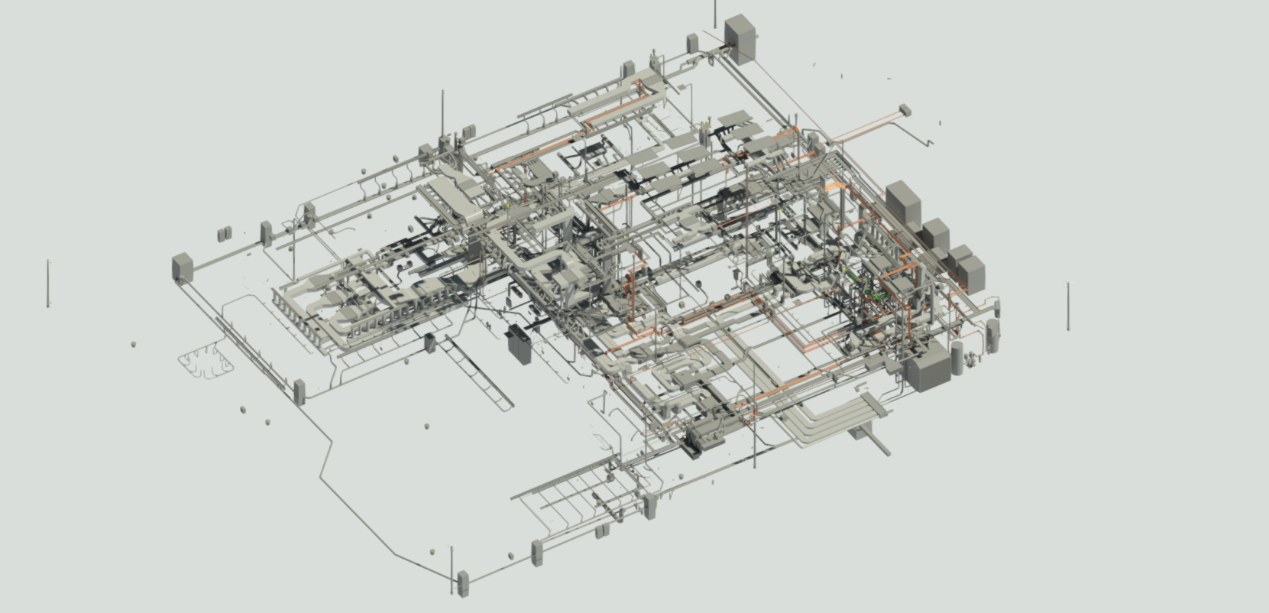
Figure 4 MEP BIM Model